Heat Stress in a working Equine: A field Case from Nepalgunj, Banke
Heat Stress in a working Equine: A field Case from Nepalgunj, Banke
Dr. Sudarshan Bhattarai1
- Animal Health Training and Consultancy Service (AHTCS), Pokhara-13, Arba
Abstract
A heat stress is a major welfare concern in working equines, particularly in hot and humid environments such as Nepalgunj, Banke can be defined as abnormal physiological state, occurring when the body cannot cool itself to maintain healthy temperature. Without timely intervention, it can progress to life threatening heat stroke.
A working horse was presented with tachycardia (90bpm), tachypnea (65bpm), hyperthermia (103.6F), profuse sweating, congested mucus membrane, and depression. History reveled prolonged daily work in high temperature and humid environment (33-34oC). Clinical assessment indicated heat stress and dehydration.
Provision of shade, water, and active cooling with surface wiping was done as primary intervention. IV Ringer’s Lactate administered at calculated rate combining maintenance (60mL/kg/day) and estimated 5% dehydration deficit. Flunixin Meglumine was given to control fever and inflammation. Regular monitoring showed reduction of rectal temperature to 100.5 F within 3 hours.
On follow up next day, heart rate and respiratory rate remained high but markedly improved as compared to the initial presentation. Advise was given to the owner on preventive management, including rest, shade, and water access.
This case illustrated the importance of early recognition and prompt management of heat stress in working equines. Supportive therapy, combined with owner education is important to safeguarding equine welfare in hot and humid climates.
Keywords: Tachycardia Tachypnea Preventive Management Supportive therapy
Introduction
Heat stress is an abnormal physiological state, occurring when the body cannot cool itself to maintain healthy temperature[1]. Healthy and adult horses can balance accumulation and dissipation of body heat to maintain its healthy temperature which lies in the range of 37.5 and 38.5 0 C (99.5 F- 101.5 F). However, under some circumstances like working under hot and humid condition, the accumulation of body heat exceeds the dissipation and horses can suffer from heat stress[2]. Without intervention, heat stress can progress into a life-threatening condition called heat stroke, or hyperthermia (105F), and blood supply to the muscles and organs can be affected[3]. Heat stress is a common welfare challenge in working equines especially in hot and humid regions like Nepalgunj, Banke. Clinical signs of heat stress include tachypnea, dyspnoea, depression, congested mucus membranes and potentially ending in death due to anhidrosis, heat stroke, or brain damage1,2. Studies in South Asia have shown a heat stress prevalence of approximately 5% in working equids after labor in Brick Kilns, with risk factors such as direct sunlight exposure, dehydration, and insufficient owner awareness1. Additionally, the behavioral measures and simple diagnostics like the skin tent test have found to be effective for early detection of heat stress and timely intervention in the field[4]. This case study from Nepalgunj, Banke of a working horse suffering from heat stress aims to illustrate practical recognition, management, and prevention strategies under field conditions.
Case Presentation
- Species: Horse
- Age and Sex: 8-year-old male horse
- Breed type: Local terai pony breed
- Body weight: 280 Kgs
- Owner’s Occupation: Brick Kiln work and transport using cart
History:
According to the owner, the horse had been showing concerning symptoms for approximately one week, particularly during daytime and evening. During these periods, the animal exhibited visibly increased respiratory effort, panting with flared nostrils, appeared depressed, and showed reluctance to drink and eat. The horse was laboring continuously in hot and humid conditions with ambient temperature ranging between 33-340 C and real feel index was around 41-420C.
Clinical Findings
On physical examination, the horse demonstrated clear signs of heat stress.
- Heart Rate: 90 bpm (tachypnea, normal resting range is 28-44bpm)
- Respiratory Rate: 65 bpm (tachypnoea; normal resting range 8-16 bpm)
- Rectal temperature: 103.6 F (hyperthermia; normal range 99.5-101.5 F)
- Body condition: normal BCS, sweaty coat with visibly moist skin
- Nostrils: Markedly flared up, consistent with increased respiratory effort.
- Neurological/mental status: Depressed, reluctant to respond to stimuli
- Peripheral signs: Ears palpably hot to touch, reflecting elevated peripheral vasodilation
- Mucus membrane: slightly congested
- CRT: normal (approx.. 2 seconds) may be due to vasodilation
- Skin tent: delayed return, indicates dehydration, but this may reflects skin elasticity/fluid status, not perfusion.
Management and Interventions
After diagnosing heat stress based on clinical findings, immediate and evidence based interventions were implemented.
- Shade provided: horse was moved to a shaded area to reduce direct sun exposure.
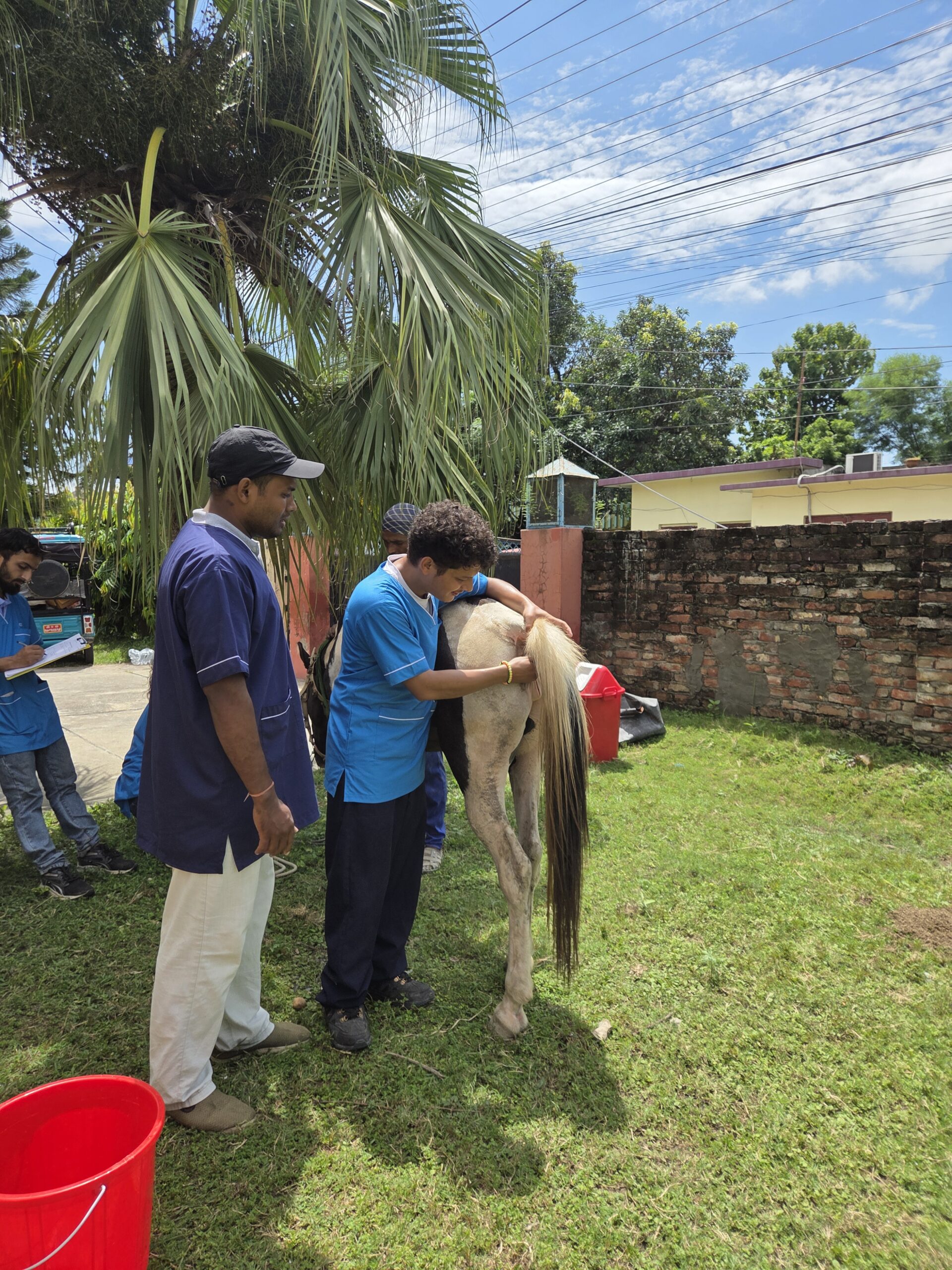
- Cooling techniques: The body was continuously wiped with cool water to facilitate evaporative cooling as the cool water application is effective for cooling the horses with heat stress3.
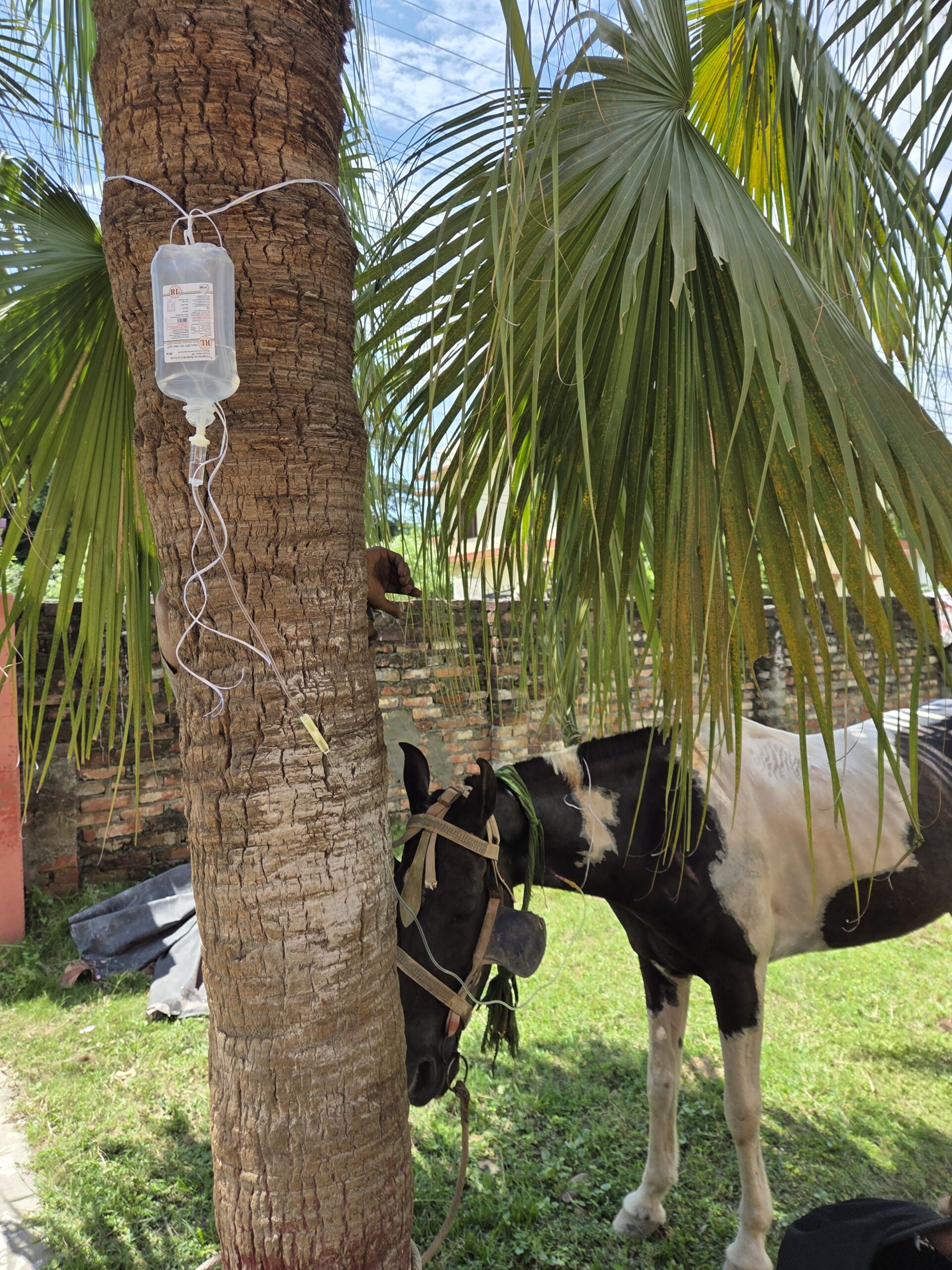
- Fluid therapy: oral hydration with fresh, cool water was offered to assess voluntary intake and hydration status. After then intravenous fluid administration was done (maintenance fluid rate calculated at 60ml/kg/24hr, and dehydration correction for approx.. 5% dehydration) estimating total fluid requirement approximately 1200ml/hr. Ringers lactate was administered over a 3 hour period. This approach of fluid therapy aligns with the recommended practiced for fluid therapy in dehydrated horses as per J.C Priitchard4.
- Flunixin meglumine administered at the dose rate of 1.1 mg/kg body weight to reduce body temperature. Tis NSAID is commonly used in managing temperature in equine heat stress[5].
- Temperature monitoring: Rectal temperature was recorded at regular intervals. Initial temperature was 103.6 F and after one hour and three hours the temperature reduced to 101 F and 100.5 F respectively.
- Vital signs monitoring: HR and RR showed improvement but remained elevated compared to baseline, indicating ongoing recovery.
- Advise to the owner: Owner was advised to provide rest and avoid work for 15 days and to provide suitable environment in his barn. Owner was also instructed to observe for any signs of recurring heat stress and seek veterinary attention if necessary.
Discussion
Pathophysiology of Heat Stress in Horses:
Heat stress is an important welfare issue, however, there is not a clear definition of heat stress in horses, and there is little data available regarding this condition. In relation with welfare in the horses, heat stress can be defined as the inability of the horse to maintain body temperature within a prescribed temperature range2. Horses primarily regulate body temperature through sweating and vasodilation. In hot and humid conditions, these mechanisms can become overwhelmed, leading to heat stress. Signs may include hyperthermia, tachycardia, tachypnea, and lethargy. If untreated, heat stress can progress to heat stroke, characterized by temperatures exceeding 105 F in some cases, which can cause organ dysfunction and, if severe, death5.
Treatment strategies and Medications
Literature supports continuous application of cool water (not ice water) as the most effective method for rapid cooling in horses[6]. Continuous application of cool water rapidly lowers the rectal temperature and prevent heat stress. In our case, external cooling water and provision of shade were implemented, aligning with current best practices. However, we were not fully able to provide the cool air due to resource constraint.
Fluid therapy is another essential strategy to address dehydration, electrolyte losses, and hypovolemia caused by prolonged sweating. IV administration of Ringer’s lactate is an appropriate choice as it provides sodium, potassium, calcium, and lactate for buffering, thereby helping restore acid-base balance and circulatory stability[7].
NSAIDs such as flunixin meglumine may also be administered for their antipyretic and anti-inflammatory effects. However, their use must be judicious, as NSAIDs can predispose to renal compromise in dehydrated animals[8],[9]. In this case, flunixin was used, but we should be cautious in future cases and should give after rehydration if necessary.
Working equids in hot climates are at high risk of heat stress when subjected to heavy workloads without adequate rest, shade, or water access. Appropriate owner education on preventive measures including work hours scheduling, provision of shade, free access to water, and recognizing early signs of heat stress can reduce mortality of working equines[10]
Recovery and Prognosis:
With prompt and appropriate treatment, most horses can recover fully from the heat stress. However, there are few long-term consequences like anhidrosis or organ damage2. Ongoing monitoring and gradual reintroduction to work are recommended by various literatures.
Preventive Measures:
Preventing heat stress involves acclimatization, proper hydration, and avoiding strenuous activity during peal heat hours. Access to shade and adequate ventilation during such weather is also an important factor to prevent heat stress. Owner education on recognizing early signs of heat stress and implementing preventive strategies5.
Conclusion
This field case highlights the significant risk of heat stress in working equines exposed to high temperature and humidity, as commonly observed in Nepalgunj, Banke. Prompt recognition of clinical signs such as tachypnea, hyperthermia, dehydration, and depression allowed timely intervention. A multimodal management strategy was implemented that is shade provision, cooling with water and cool air (though limited), IV fluid therapy with Ringer’s lactate, use of flunixin meglumine proved effective in stabilizing the horse. This case emphasizes the early detection of the eat stress, rapid cooling, and supporting care to prevent the progression to heat stroke and organ damage. Also, it is necessary to educate owners about heat stress and preventive measures, including rest periods, shade, and access to water, to safeguard equine welfare in hot and humid working environments.
[1] Mohite, D. S., Sheikh, C. S., Compston, P. C., Jobling, R., & Upjohn, M. M. (2019). Prevalence of Heat Stress in Equids Working in Brick-kilns in India. Indian Vet. J, 96 (08), 32-35.
[2] Heat Stress in Horses: a literature review, Hyungsuk Kang et. al.; 2023
[3] Retrieved from https://madbarn.ca/heat-stress-in-horses/?srsltid=AfmBOoq3dD0Oy40RsgioUSC1fMqJwUxtAc-x9sj9EAS4I5yNSf4uT078 on 8th September 2025.
[4] J.C. Pritchard; Validity of a behavioral measure of heat stress and a skin tent test for dehydration in working horses and donkeys; Equine veterinary Journal (2006) 38(5) 433-438.
[5] https://www.petmd.com/horse/emergency/heat-stress-heat-stroke-in-horses; Jennifer Rice, 2025
[6] Marlin, D. J., Scott, C. M., Roberts, C. A., Casas, I., Holah, G., & Schroter, R. C. (1998). Post exercise changes in compartmental body temperature accompanying intermittent cold water cooling in the hyperthermic horse. Equine Veterinary Journal, 30(1), 28-34. https://doi.org/10.1111/j.2042-3306.1998.tb04445.x
[7] Groover, E. S. (2023). Equine On-Farm Fluid Therapy. Auburn University College of Veterinary Medicine Conference Proceedings. Auburn University. Retrieved from vetmed.auburn.edu
[8] Lees, P., Landoni, M. F., Giraudel, J., & Toutain, P. L. (2004). Pharmacodynamics and pharmacokinetics of nonsteroidal anti-inflammatory drugs in species of veterinary interest. Journal of Veterinary Pharmacology and Therapeutics, 27(6), 479-490. https://doi.org/10.1111/j.1365-2885.2004.00618.x
[9] Toutain, P. L., Ferran, A., & Bousquet-Mélou, A. (2019). Species differences in pharmacokinetics and pharmacodynamics of veterinary drugs. Handbook of Experimental Pharmacology, 261, 19-48. https://doi.org/10.1007/164_2019_241
[10] Kang, H., Park, J., & Rhee, Y. (2023). Heat Stress in Horses: Mechanisms, Management, and Prevention. Animals, 13(4), 610. https://doi.org/10.3390/ani13040610